
Epoxy Floor Repair
Cracks, peeling, or damage to your epoxy floor? Learn what causes common coating problems, how they can be repaired, and when a new floor coating may be the better solution.

The short answer
Minor cracks, chips, and peeling epoxy can often be repaired by removing damaged material, preparing the concrete, and applying a compatible coating. Widespread peeling, moisture problems, or extensive damage may require removing and replacing the existing floor coating.
Common Epoxy Floor Problems That May Require Repair
Epoxy floors are designed for durability, but surface damage, moisture, and adhesion problems can develop over time. Understanding the type of damage helps determine whether a localized repair or a complete recoating is needed.
01
Cracks & Chips
Heavy impacts, concrete movement, and everyday wear can cause cracks or chips in an epoxy floor. Minor damage can often be repaired with appropriate patching materials and a compatible coating to restore the affected area.
02
Peeling & Delamination
Epoxy may peel or separate from the concrete due to poor surface preparation, moisture, or coating incompatibility. Repairing these areas requires removing loose material and addressing the underlying cause before applying a new coating.
03
Stains & Surface Wear
Chemical spills, abrasion, and prolonged use can leave epoxy floors stained, scratched, or dull. Depending on the condition of the existing coating, professional cleaning, surface preparation, or recoating may help restore its appearance and protection.
How Do Professionals Repair Peeling or Damaged Epoxy Floors?
Repairing a damaged epoxy floor starts with identifying the underlying cause. Peeling, bubbling, and delamination may result from poor surface preparation, excess moisture, or an incompatible coating system. Simply applying new epoxy over damaged areas will not correct these problems.
Professional epoxy floor repair typically involves removing loose or failing coating material, inspecting the exposed concrete, and preparing the surface for a new application. Cracks, chips, and other damaged areas may also need to be repaired before recoating.
For localized damage, a compatible repair material and coating may restore the affected area. However, widespread peeling or extensive coating failure may require removing the existing epoxy and installing a new flooring system.
Can an Epoxy Floor Be Repaired, or Does It Need to Be Replaced?
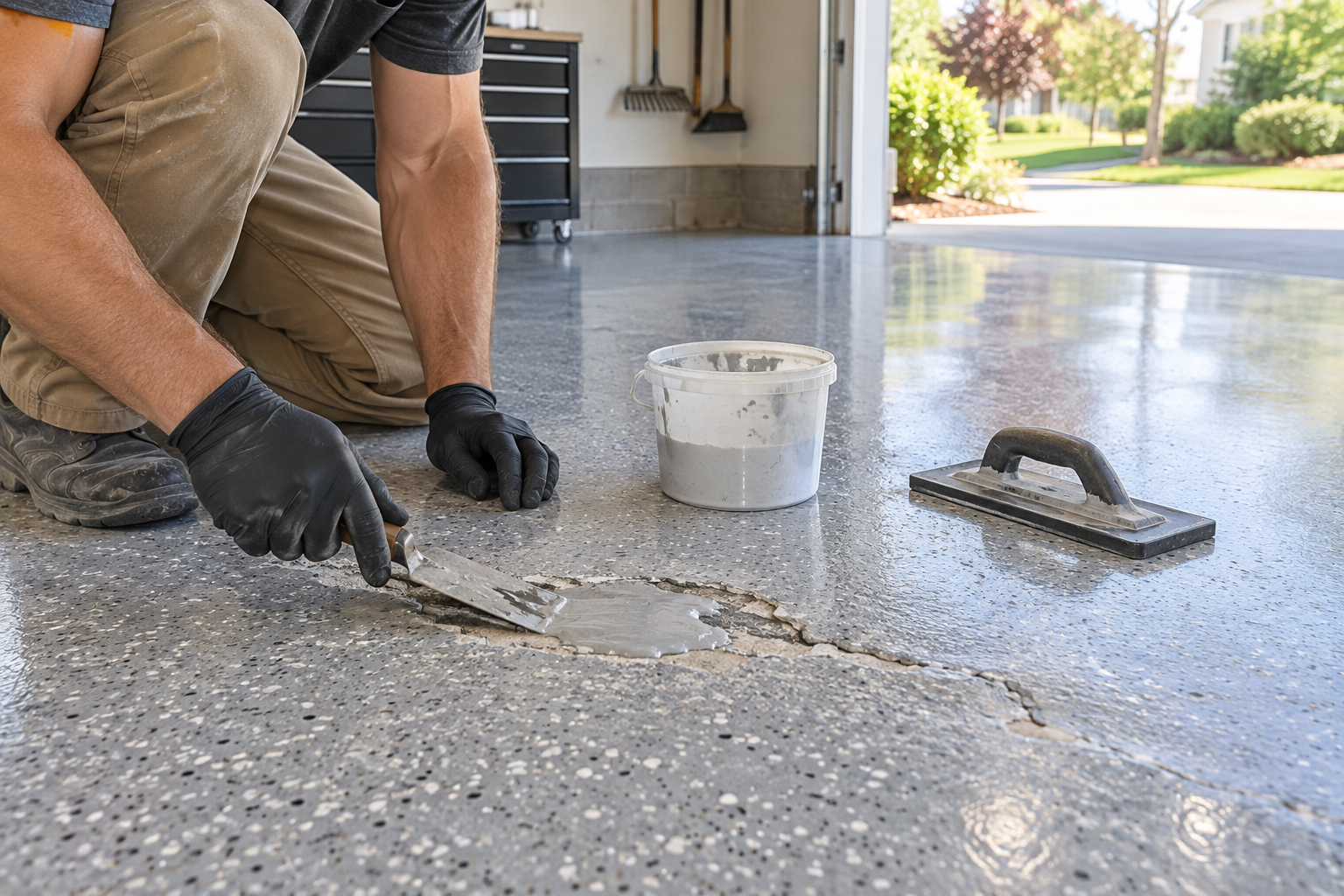
Not every damaged epoxy floor requires complete replacement. Minor chips, scratches, and isolated areas of peeling can often be repaired without removing the entire coating system.
However, widespread delamination, recurring moisture problems, or extensive concrete damage may make a full replacement necessary. Applying new epoxy over a failing coating can lead to the same problems returning, even if the floor initially looks restored.
A professional inspection can help determine whether the existing coating is firmly bonded to the concrete and whether the damage is limited to a specific area.
When the underlying concrete is sound and the surrounding coating remains intact, localized epoxy floor repair may be a practical solution. If the coating is failing across large sections of the floor, removal and professional recoating may provide a more reliable long-term result.
How Much Does Epoxy Floor Repair Cost?
The cost of epoxy floor repair depends on the type and extent of the damage, the condition of the underlying concrete, and the materials required to restore the affected area.
Small chips and isolated cracks may require relatively simple repairs, while peeling coatings, extensive surface damage, or moisture-related problems can involve more substantial preparation and labor.
Matching the color, texture, and decorative flakes of an existing floor can also affect the repair process. In some cases, recoating a larger section may be necessary to achieve a consistent appearance.
For floors with widespread damage, comparing the cost of localized repairs with complete coating replacement can help determine the most practical solution.
A professional assessment can identify the underlying problem and provide a customized quote based on your floor’s condition.
What Causes Epoxy Floors to Fail, and How Can You Prevent It?
Epoxy flooring is designed to withstand everyday use, but several factors can contribute to premature coating failure. Understanding these potential problems can help homeowners protect their floors and avoid unnecessary repairs.
Improper Concrete Preparation
Epoxy needs a properly prepared concrete surface to achieve a strong bond. Dirt, oil, existing sealers, and inadequate surface profiling can interfere with adhesion and cause the coating to peel or separate from the concrete.
Professional concrete preparation helps reduce these risks by removing contaminants, addressing surface damage, and creating the appropriate profile before coating application.
Excess Moisture
Moisture moving through a concrete slab can interfere with epoxy adhesion and contribute to bubbling, blistering, or delamination.
Evaluating moisture conditions before installation helps determine whether additional preparation, moisture mitigation, or a different coating system is necessary.
Heavy Impacts and Chemical Exposure
Dropped tools, heavy equipment, abrasive materials, and certain chemical spills can damage an epoxy floor over time.
Cleaning spills promptly, using appropriate protective mats, and following the coating manufacturer’s maintenance recommendations can help preserve the floor’s appearance and performance.
Improper Installation or Curing
Incorrect product mixing, application outside recommended temperature conditions, or using the floor before the coating has fully cured can compromise its performance.
Professional installation and following the manufacturer’s curing requirements help reduce the likelihood of premature coating failure.
Can Garage, Basement, and Commercial Epoxy Floors Be Repaired?
Epoxy floor repair is possible in many residential and commercial settings, but the appropriate repair method depends on the coating system, the underlying concrete, and how the space is used.
Garage Floor Repair
Garage epoxy floors may develop chips, scratches, peeling, or damage from vehicle traffic and dropped tools. Localized repairs can often address isolated problems, while widespread coating failure may require more extensive surface preparation and recoating.
Basement Floor Repair
Basement epoxy floors can experience damage from everyday wear, concrete movement, or moisture-related issues. Before repairing a basement floor, it is important to identify any underlying moisture problems that could affect the adhesion of the new coating.
Commercial Floor Repair
Commercial epoxy floors may be exposed to heavy foot traffic, equipment, chemical spills, and frequent cleaning. Repairing damaged areas promptly can help protect the underlying concrete and reduce further deterioration.
Depending on the extent of the damage and the facility’s operating requirements, localized repairs or larger-scale recoating may be appropriate.
Regardless of the application, identifying the cause of the damage is essential to selecting a repair method that provides lasting results.
Frequently Asked Questions About Epoxy Floor Repair
Can you repair a small section of an epoxy floor?
Yes. Small chips, cracks, and isolated areas of peeling can often be repaired without replacing the entire floor. The damaged coating must be removed or properly prepared, and compatible repair materials applied. However, matching the original color, texture, and decorative flakes may be difficult, so some repairs may remain visible.
Can peeling epoxy be repaired without removing the entire coating?
If peeling is limited to a small area and the surrounding coating remains firmly bonded, a localized repair may be possible. The loose epoxy must be removed, the exposed concrete prepared, and the underlying cause addressed before applying a new coating. Widespread peeling may require complete coating removal and replacement.
How long does epoxy floor repair take?
Minor epoxy floor repairs may be completed in a few hours, but the repaired area may require additional curing time before it can be used. Larger repairs involving coating removal, concrete preparation, or moisture treatment can take longer. The exact timeline depends on the extent of the damage and the repair materials used.
Can you repair scratches on an epoxy garage floor?
Yes. Light surface scratches may be addressed through cleaning, polishing, or applying a compatible topcoat, depending on the existing flooring system. Deeper scratches that penetrate the coating may require localized surface preparation and recoating. The appropriate repair method depends on the depth of the damage and the condition of the surrounding floor.
Will a repaired epoxy floor look the same as the original?
Professional repairs can improve the appearance of damaged epoxy flooring, but an exact match is not always possible. Differences in coating age, color, gloss, and decorative flake patterns may make repaired areas noticeable. Recoating a larger section or the entire floor may provide a more consistent appearance when matching the original finish is a priority.
Can epoxy floor damage come back after a repair?
Yes. Damage can return if the underlying cause is not properly addressed. Excess moisture, concrete movement, poor adhesion, or an incompatible coating system can cause recurring problems. Identifying and correcting these issues before applying repair materials helps reduce the risk of future coating failure.
Restore Your Epoxy Floor's Appearance and Durability
Dealing with cracks, peeling, or a damaged floor coating? Tell us about your project, and we’ll help you explore your epoxy floor repair options in Marshall, MO.