
Epoxy Floor Installation: What to Expect
See how professional epoxy floor installation works, from concrete preparation and repairs through coating application and cure.

The short answer
Professional epoxy floor installation involves preparing the concrete, repairing defects when needed, applying the coating system, and allowing the floor to properly cure. Proper preparation is one of the biggest factors in how the finished floor looks and performs.
What Happens During Professional Epoxy Floor Installation?
Professional epoxy floor installation follows a specific process. While the exact system can vary by floor, most projects move through the same basic stages – from evaluating and preparing the concrete to applying the coating and allowing it to properly cure.
01
Evaluate the concrete
The floor is inspected for cracks, damage, existing coatings, moisture concerns, and other conditions that could affect the installation.
02
Prepare the surface
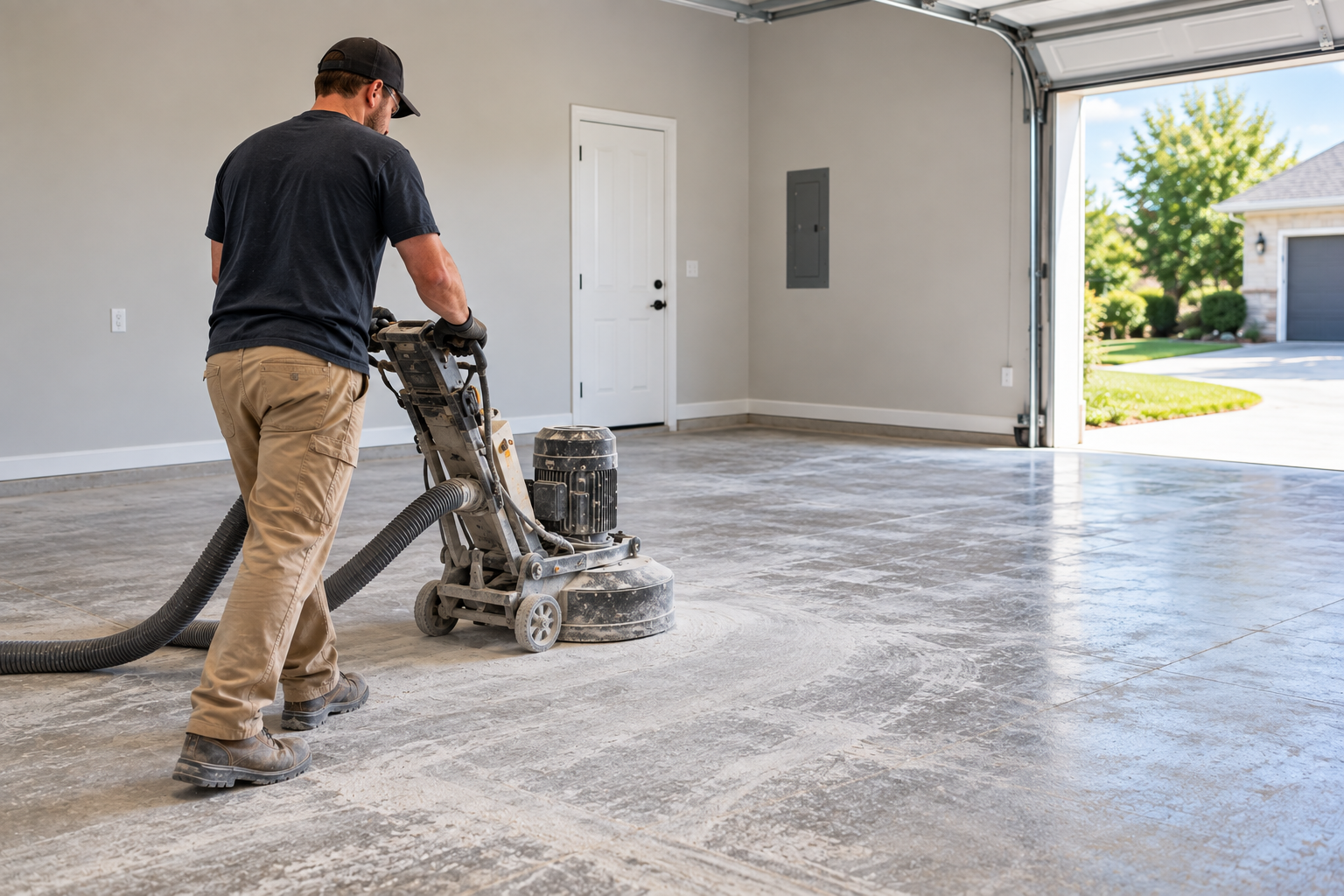
The concrete is mechanically ground to remove contaminants, open the surface, and create the proper profile for the coating to bond.
03
Repair cracks & defects
Cracks, pits, spalling, and other damaged areas are repaired as needed before the coating system is applied.
04
Apply the coating system
The selected coating system is applied in layers. Depending on the system, decorative flakes or other finishes may be added during this stage.
05
Allow the floor to cure
The coating needs time to properly cure before the floor can handle foot traffic, vehicles, equipment, or normal use.
What Makes a Professional Epoxy Floor Installation Different?
A great-looking epoxy floor starts long before the first coat is applied. The condition of the concrete, the preparation process, and the coating system all play a role in how well the finished floor looks and performs.
Professional installers evaluate the existing concrete, address cracks and surface damage, and mechanically prepare the floor to create a surface the coating can properly bond to. They also select the appropriate coating system for the space and apply each layer according to the manufacturer’s specifications.
The result is more than an attractive finish. It’s a floor designed to withstand everyday use, resist wear, and provide lasting performance.
Why Concrete Preparation Matters
Proper concrete preparation is one of the most important parts of a successful epoxy floor installation. Before any coating is applied, the surface must be clean, sound, and properly prepared to allow the epoxy to bond to the concrete.
Professional installers typically use mechanical grinding to remove contaminants, old coatings, and weak surface material while creating the surface profile needed for proper adhesion.
Skipping or rushing this step can lead to peeling, bubbling, or premature coating failure. Even a high-quality epoxy coating can fail if the concrete underneath hasn’t been properly prepared.
Learn more about the process in our guide to concrete preparation for epoxy flooring.
Repairing Cracks and Surface Damage
Cracks, pits, and other surface defects should be addressed before an epoxy coating is applied. Simply coating over damaged concrete won’t correct the underlying problem, and imperfections may remain visible through the finished floor.
Depending on the condition of the concrete, installers may fill cracks, patch damaged areas, or use specialized repair materials to create a more uniform surface. These repairs are typically completed before the final surface preparation and coating application.
Some cracks may indicate ongoing movement or structural issues that a surface repair alone cannot resolve. Evaluating the damage beforehand helps determine whether the concrete is suitable for coating and what repairs may be necessary.
Applying the Epoxy Coating System
Once the concrete has been prepared and any necessary repairs are complete, the installation crew begins applying the selected coating system.
Depending on the system, installation may include a primer to promote adhesion, an epoxy base coat, decorative flakes or other finishes, and a protective topcoat. Each layer contributes to the appearance, durability, and performance of the finished floor.
The number of coats, application methods, and waiting periods between layers vary depending on the products used and the conditions of the space. Following the manufacturer’s specifications helps ensure the coating system performs as intended.
Learn more about the differences between coating systems in our guide to epoxy vs. polyaspartic flooring
How Long Does Epoxy Flooring Take to Cure?
After the final coat is applied, your new epoxy floor needs time to cure before it can handle normal use. The exact timeline depends on the coating system, temperature, humidity, and installation conditions.
Many conventional epoxy systems allow light foot traffic after approximately 12–24 hours, while vehicle traffic may require several days. Some systems can take 5–7 days or longer to reach full cure.
Your installer should provide specific instructions for when you can walk on the floor, move belongings back into the space, and park vehicles. Following these recommendations helps protect the coating while it develops its intended hardness and durability.
Planning your flooring project? Learn more about pricing in our guide to epoxy floor coating cost.
Frequently Asked Questions
How long does epoxy floor installation take?
Most residential epoxy floor installations take approximately 1–3 days to complete, depending on the size and condition of the concrete, necessary repairs, and the coating system selected. Additional curing time may be required before the floor can handle foot traffic or vehicles.
Can epoxy be installed over existing concrete?
Yes. Epoxy coatings can be applied to many existing concrete floors, provided the surface is structurally sound and properly prepared. Cracks, moisture issues, existing coatings, and surface damage should be evaluated before installation. Some floors may require additional repairs or preparation to ensure proper adhesion.
How much does epoxy floor installation cost?
The cost of epoxy floor installation depends on the size of the area, condition of the concrete, preparation and repair requirements, and the coating system selected. Decorative finishes and additional protective layers can also affect the price. A customized quote provides a more accurate estimate based on your specific floor and project requirements.
What's the difference between epoxy and polyaspartic flooring?
Epoxy and polyaspartic are both resin-based floor coating options, but they differ in application requirements, curing times, and performance characteristics. Polyaspartic coatings typically cure faster and offer greater UV resistance, while epoxy systems provide a durable finish with a range of decorative options. The appropriate system depends on the condition of your concrete, how the space will be used, and your project requirements.
Do I need to move everything out of my garage before installation?
Yes. Your garage should be completely emptied before installation begins. Vehicles, tools, storage cabinets, furniture, and other belongings must be removed so the crew can access the entire concrete surface. The floor also needs to remain clear during application and curing. Your installer will let you know when it is safe to move everything back inside.
How long will an epoxy floor last?
A professionally installed epoxy floor can last for many years with proper care. Its lifespan depends on the quality of the installation, the coating system, traffic levels, exposure to chemicals and sunlight, and routine maintenance. Proper concrete preparation and choosing a coating system suited to the space are important factors in long-term performance.
Ready to Upgrade Your Concrete Floor?
Tell us about your space and get a customized quote for your epoxy floor installation in Marshall, MO.