
Industrial Epoxy Flooring
in Marshall, MO
Built to handle the demands your facility puts on the floor every day.
Your Floor Takes the Abuse. Your Operation Shouldn’t.
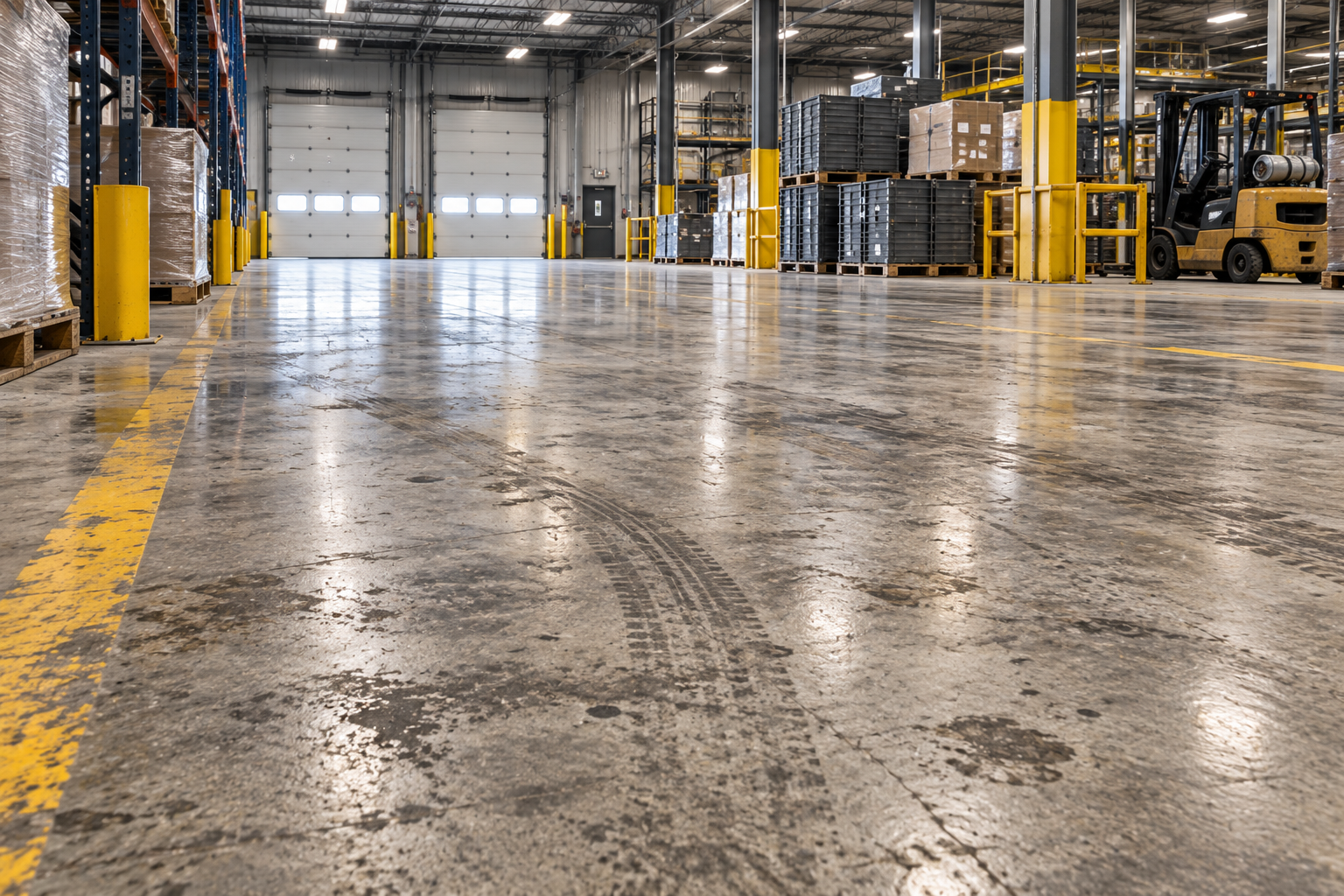
Forklifts, equipment, heavy traffic, spills, and constant use can put tremendous demands on an industrial concrete floor.
When the surface begins to wear, crack, or deteriorate, it can become harder to clean, harder to maintain, and another problem your facility has to manage.
Your floor shouldn’t be the weak point in your operation. The right industrial coating system creates a durable surface designed around the conditions your facility actually faces.
Your Facility Determines the Right Flooring System.
There’s no one-size-fits-all coating for an industrial floor.
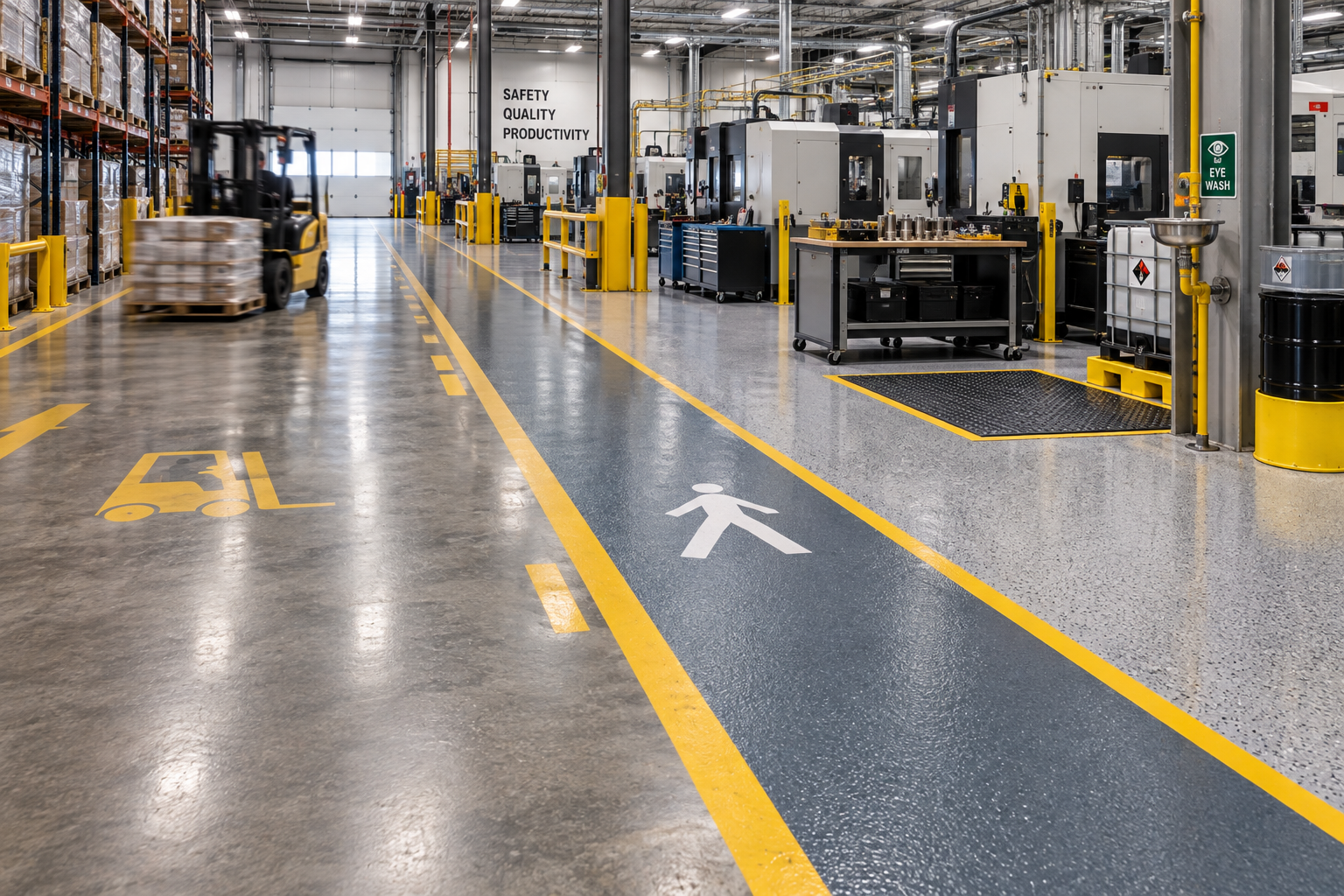
A distribution center with constant forklift traffic has different requirements than a manufacturing facility exposed to chemicals, equipment, or repeated impact.
We start by understanding your concrete, traffic, working conditions, and operational needs. Then we can help determine the coating system that makes sense for your facility.
Built Around Your Facility. Not the Other Way Around.
An industrial flooring project needs a clear plan before work begins. We make the process straightforward.
01
Evaluate the Facility
We look at your concrete, traffic, equipment, exposure, and the demands placed on the floor.
02
Build the Right Flooring Plan
We determine the preparation, coating system, and project approach that fit your facility.
03
Put Your Floor to Work
Your new floor is professionally installed and prepared for the demands of your operation.
Need a Floor Built for a Tougher Environment?
Tell us about your facility, the conditions your floor faces, and what isn’t working today. We’ll help you determine the right approach for your project.
Floor Failure Creates Problems Beyond the Floor.
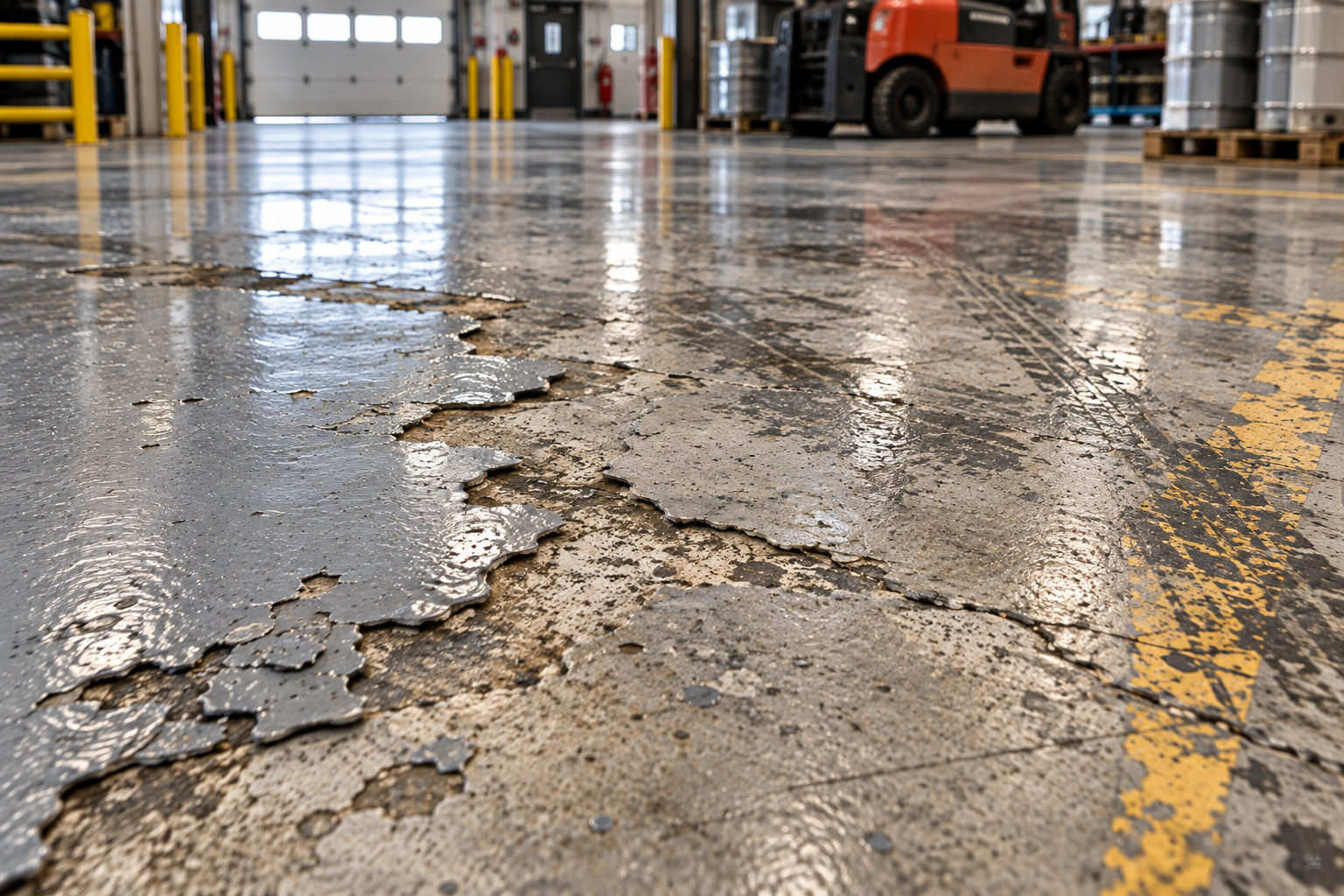
Peeling coatings, damaged surfaces, and premature wear don’t just look bad in an industrial facility.
They can create additional maintenance, interfere with cleaning, disrupt work areas, and eventually require the floor to be repaired or recoated.
Choosing the right system—and preparing the concrete for the conditions it will face—helps avoid turning your flooring project into a problem you have to solve twice.
A Floor That Keeps Up With Your Operation.
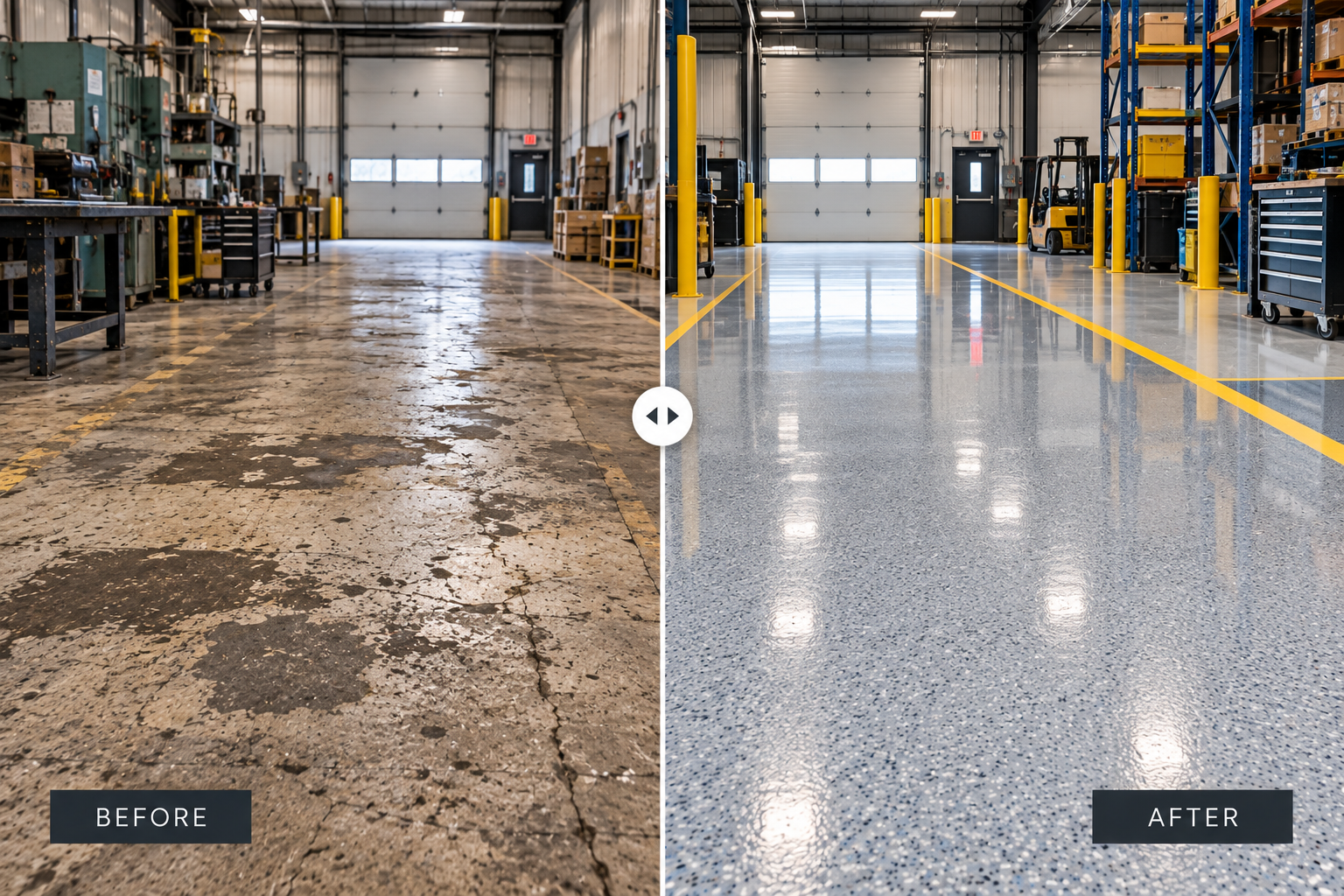
The right industrial floor becomes something you don’t have to think about every day.
It provides a clean, durable surface designed for the traffic, equipment, and working conditions inside your facility.
Whether you’re upgrading a warehouse, manufacturing facility, distribution center, or other industrial space, the goal is simple: a floor that performs as part of the operation instead of getting in its way.
What Does Industrial Epoxy Flooring Cost?
Industrial flooring projects can vary significantly in size, condition, and performance requirements.
Square footage, concrete condition, surface preparation, coating system, chemical exposure, traffic, and project logistics can all affect the final cost.
We’ll evaluate what your facility actually requires before recommending a system and providing an estimate.
Common Industrial Flooring Questions
Can epoxy flooring handle forklifts and heavy equipment?
Industrial coating systems can be designed for areas exposed to forklifts, carts, machinery, and other heavy traffic. The appropriate system depends on the type and frequency of traffic, the condition of the concrete, and the demands of the facility.
Are industrial epoxy floors resistant to chemicals?
Chemical resistance varies by coating system and by the substances the floor may encounter. Understanding the chemicals, oils, cleaners, or other materials used in the facility is important when selecting an appropriate coating system.
Can different areas of a facility require different coatings?
Yes. Production areas, aisles, loading areas, storage spaces, and other parts of a facility can face very different conditions. The flooring plan can account for how individual areas are used rather than treating the entire facility exactly the same.
How do you minimize disruption during installation?
Project scheduling depends on the size of the facility, preparation required, coating system, cure times, and how the work area is used. These factors should be considered before installation so the project can be planned around the facility’s operational needs.