
Concrete Preparation for Epoxy Flooring
A durable epoxy floor starts with properly prepared concrete. Learn how professional surface preparation, crack repairs, and moisture testing help create a long-lasting finish.

The short answer
Proper concrete preparation ensures epoxy bonds securely to the surface, preventing peeling, bubbling, and premature coating failure.
The Three Essential Steps of Concrete Preparation
Before applying an epoxy floor coating, professional installers prepare the concrete to ensure proper adhesion and long-term durability.
01
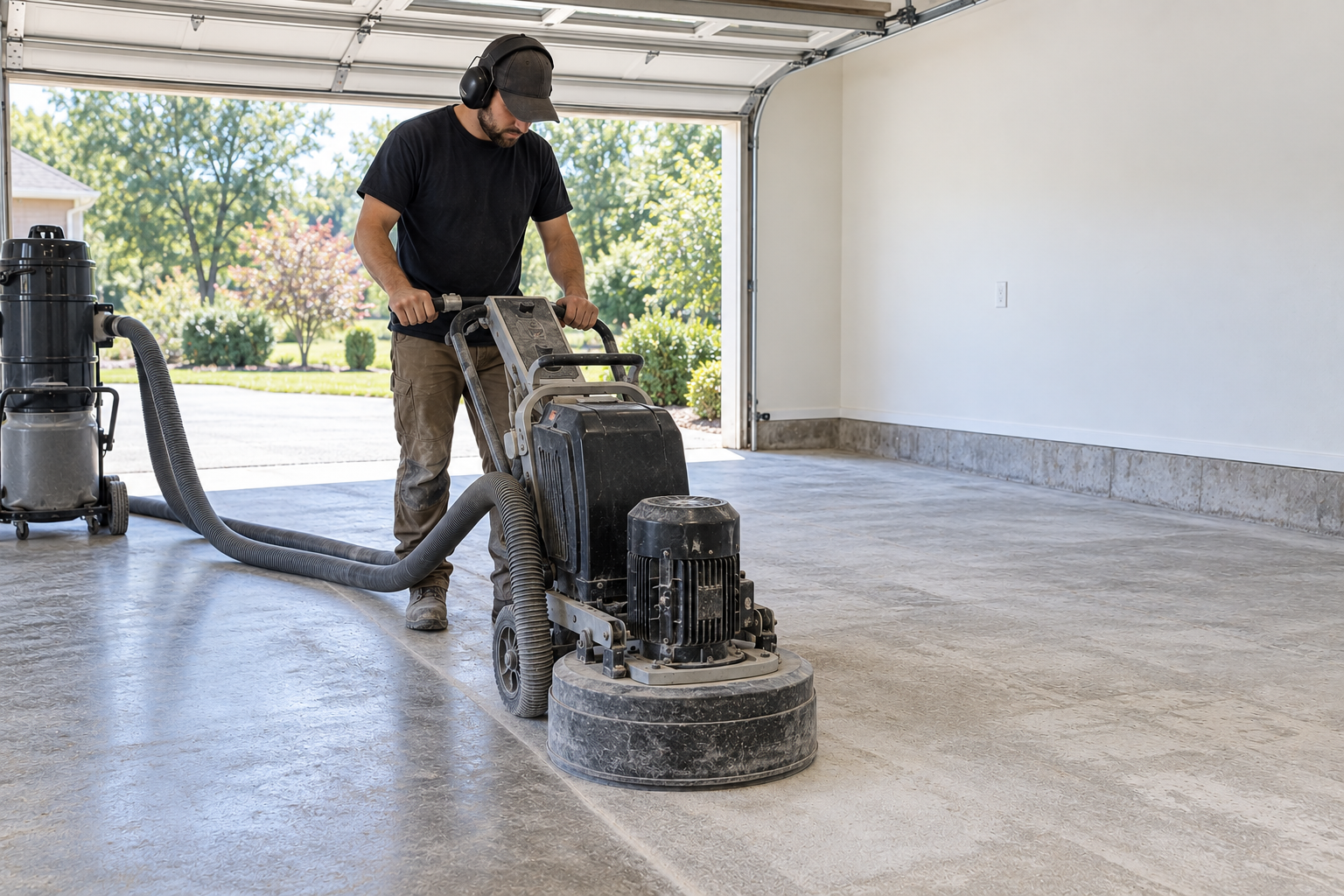
Concrete Cleaning & Grinding
Dirt, oil, existing coatings, and surface contaminants must be removed. Mechanical diamond grinding opens the concrete’s pores and creates the surface profile needed for a strong epoxy bond.
02
Crack & Surface Repairs
Cracks, chips, and damaged areas are evaluated and repaired using appropriate materials. These repairs help create a more uniform surface and reduce the risk of visible imperfections in the finished coating.
03
Moisture Testing & Inspection
Excess moisture can interfere with coating adhesion and cause premature failure. Professional installers evaluate moisture conditions and confirm that the concrete is suitable for the selected epoxy coating system.
How Does Concrete Grinding Improve Epoxy Adhesion?
Concrete grinding is one of the most important steps in preparing a floor for epoxy coating. Even concrete that looks clean and smooth may have contaminants, sealers, or a surface that prevents epoxy from bonding properly.
Professional installers use diamond grinding equipment to remove surface imperfections and create a textured profile that allows the epoxy coating to adhere securely to the concrete.
Unlike simple cleaning or pressure washing, mechanical grinding prepares the actual concrete surface for coating application. This helps reduce the risk of peeling, delamination, and premature coating failure.
Should Cracks and Damage Be Repaired Before Applying Epoxy?
Cracks, chips, and surface damage should be evaluated before applying an epoxy floor coating. Although epoxy can create a smooth, attractive finish, it is not a substitute for repairing damaged concrete.
During preparation, professional installers inspect the floor for cracks, spalling, uneven areas, and other imperfections. Depending on the condition of the concrete, appropriate repair materials may be used to fill cracks, patch damaged areas, and create a more uniform surface.
Proper repairs help prevent existing imperfections from affecting the appearance and performance of the finished coating. However, active cracks caused by ongoing concrete movement may require additional treatment and can reappear even after repairs.
Addressing these issues before installation helps create a stronger foundation for a durable, long-lasting epoxy floor.
Dealing with cracks, peeling, or damage to an existing coating? Learn more about your options in our guide to epoxy floor repair.
Why Is Moisture Testing Important Before Epoxy Flooring?
Excess moisture in concrete is one of the potential causes of epoxy coating failure. Even when a concrete floor appears completely dry, moisture vapor moving through the slab can interfere with coating adhesion and contribute to bubbling, blistering, or delamination.
Before installation, moisture conditions should be evaluated to determine whether the concrete is suitable for the selected coating system. Depending on the project and product requirements, professional installers may use concrete moisture testing methods to assess the slab.
If excessive moisture is detected, additional preparation, moisture mitigation, or a different coating system may be necessary before installation can proceed.
Identifying moisture problems before applying epoxy helps reduce the risk of premature coating failure and costly repairs.
Can Epoxy Be Applied Over Painted or Previously Coated Concrete?
Applying epoxy over an existing painted or coated concrete floor requires careful evaluation. Old paint, sealers, adhesives, and deteriorating coatings can prevent new epoxy from bonding properly to the underlying concrete.
During surface preparation, professional installers inspect the existing floor to determine whether previous coatings need to be removed. Diamond grinding or other appropriate removal methods may be used to expose sound concrete and create the surface profile required for the new coating system.
Oil, grease, and other contaminants must also be addressed before installation. Simply applying epoxy over a contaminated surface can lead to poor adhesion, peeling, and premature coating failure.
Removing incompatible coatings and properly treating contaminated areas helps ensure the new epoxy flooring system bonds securely to the concrete.
How Should You Prepare Your Garage for Epoxy Floor Installation?
Homeowners can help make the installation process more efficient by preparing their garage before the flooring crew arrives. Clearing the space allows installers to inspect the entire concrete surface, identify potential problems, and complete the necessary preparation work.
Before your scheduled installation:
Remove vehicles, tools, storage containers, furniture, and other belongings from the garage floor.
Clear the areas along the walls and baseboards so installers can access the edges of the concrete.
Identify any known moisture problems, previous coatings, or areas where the concrete has been damaged.
Arrange an alternative parking or storage location while the coating is installed and allowed to cure.
Your flooring contractor can explain any additional preparation requirements and provide guidance on when the finished floor will be ready for foot traffic and vehicles.
Learn more about what happens after concrete preparation in our guide to epoxy floor installation.
Frequently Asked Questions About Concrete Preparation for Epoxy Flooring
How long does concrete preparation take before epoxy flooring?
Concrete preparation typically takes several hours, but the exact timeline depends on the size and condition of the floor. Garages with extensive cracks, existing coatings, or moisture problems may require additional preparation before epoxy can be applied.
Does concrete need to be completely dry before applying epoxy?
Concrete must meet the moisture requirements of the selected epoxy coating system before installation. A floor that appears dry on the surface may still contain excessive moisture within the slab. Professional moisture testing can help determine whether the concrete is suitable for coating.
Can you apply epoxy to new concrete?
Yes, but newly poured concrete must cure sufficiently and meet the coating manufacturer’s moisture requirements before epoxy is applied. Many conventional epoxy systems require approximately 28 days of concrete curing, although the actual waiting period depends on the product and site conditions. Proper surface preparation is still necessary before installation.
Is acid etching as effective as grinding concrete for epoxy flooring?
Acid etching can create a surface profile on certain concrete floors, but it may not adequately remove existing coatings, oil contamination, or other surface defects. Professional diamond grinding provides a more controlled method of preparing concrete and is commonly used for garage and commercial epoxy flooring installations.
Can epoxy flooring be installed over uneven concrete?
Epoxy can be applied to concrete with minor surface imperfections, but significant unevenness, damaged areas, or structural problems may require additional preparation. Grinding and appropriate repair materials can address certain surface irregularities. Epoxy coating alone will not level a substantially uneven floor.
What happens if concrete is not properly prepared before epoxy installation?
Inadequate concrete preparation can prevent epoxy from bonding securely to the surface. This may result in peeling, bubbling, delamination, or premature coating failure. Proper cleaning, mechanical preparation, repairs, and moisture evaluation help create the conditions needed for a durable, long-lasting floor coating.
A Better Epoxy Floor Starts With Proper Preparation
Professional concrete preparation is the foundation of a durable, long-lasting epoxy floor. Tell us about your project and get a customized quote for your garage, basement, or commercial flooring in Marshall, MO.