
Epoxy vs. Polyaspartic Flooring: What's the Difference?
Compare epoxy and polyaspartic flooring to discover the differences in durability, installation time, UV resistance, and cost—and find the right coating for your space.

The short answer
Epoxy flooring is known for its durability, versatility, and generally lower material cost. Polyaspartic coatings offer faster curing times, excellent UV resistance, and greater flexibility. Both can provide long-lasting protection when properly installed, and the right choice depends on your space, budget, and performance needs.
Epoxy vs. Polyaspartic Flooring: Key Differences
Epoxy and polyaspartic coatings both protect concrete and create an attractive, easy-to-clean surface. However, they differ in curing time, UV resistance, flexibility, and cost.
Understanding these differences can help you choose the right coating system for your space and how you plan to use it.
- Epoxy Flooring
Epoxy creates a hard, durable surface that protects concrete from everyday wear, spills, and stains. It offers a wide range of colors and finishes and generally has a lower upfront material cost.
- Polyaspartic Flooring
Polyaspartic coatings offer fast curing times, excellent UV resistance, and a durable, flexible finish. Many systems allow floors to return to service sooner, making them a popular option for garages and other high-use spaces.
- Which Coating Is Right for You?
The right choice depends on your space, budget, and performance needs. Epoxy and polyaspartic coatings can both provide long-lasting protection when properly installed. Comparing curing times, sunlight exposure, and intended use can help you select the right system.
How Do Epoxy and Polyaspartic Floors Compare in Durability?
Both epoxy and polyaspartic coatings can provide years of protection against everyday wear, spills, and stains. However, their performance characteristics differ, making each system better suited to certain applications.
Epoxy creates a hard, durable surface that performs well in garages, basements, and commercial spaces. Polyaspartic coatings offer greater flexibility and UV resistance, making them particularly useful in areas exposed to sunlight or changing temperatures.
The longevity of either system depends on proper concrete preparation, installation quality, and the conditions the floor is exposed to. A professionally installed coating system tailored to your space can provide lasting protection and an attractive finish.
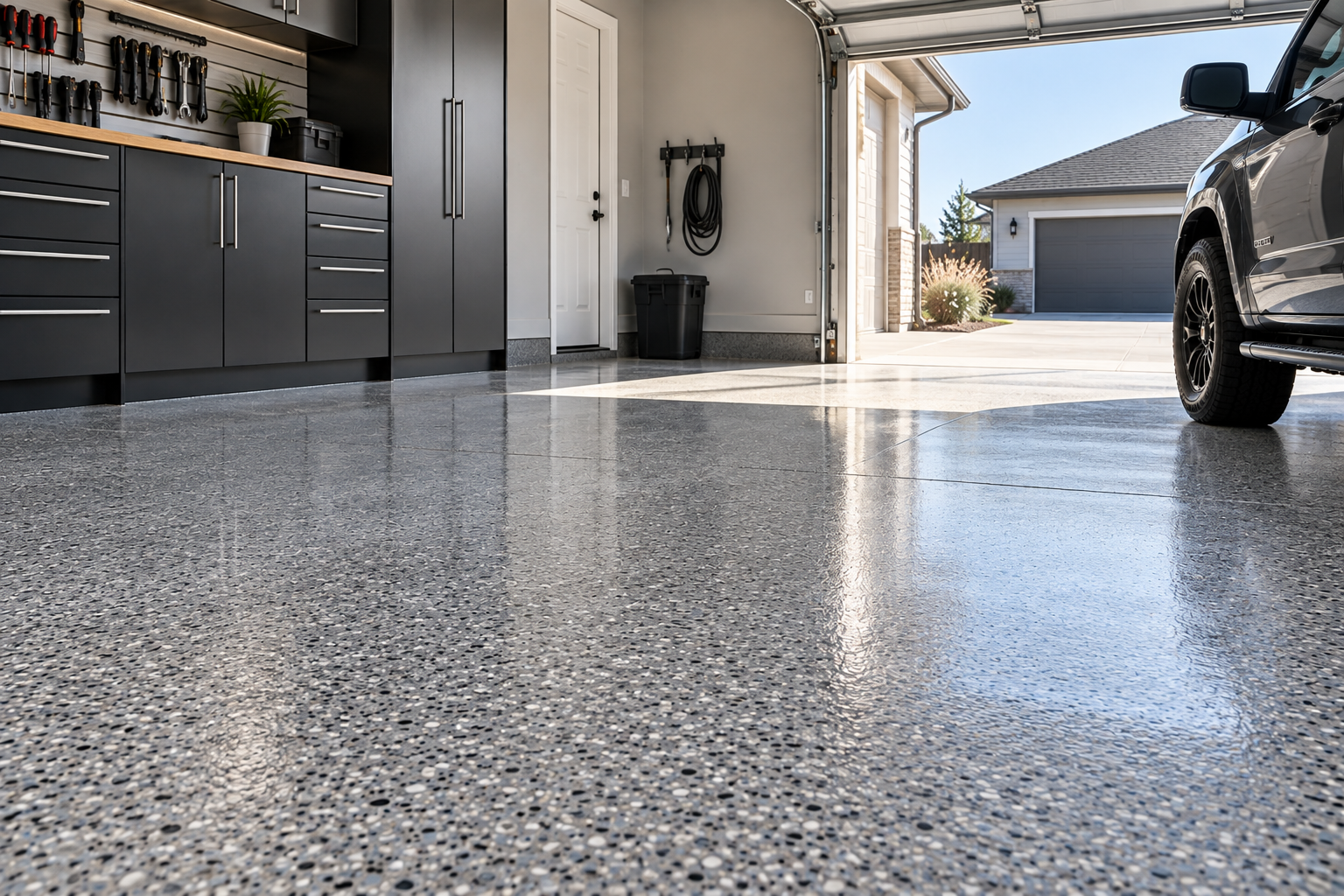
How Long Does Epoxy vs. Polyaspartic Flooring Take to Install?
Both epoxy and polyaspartic flooring require proper concrete preparation before the coating can be applied. However, the time needed for installation and curing can vary significantly between the two systems.
Epoxy flooring typically requires a longer curing period before the surface is ready for regular use. Depending on the product, temperature, and number of coats, homeowners may need to wait several days before parking vehicles on the finished floor.
Polyaspartic coatings cure much faster, allowing some garage flooring systems to be installed in a single day. Many polyaspartic systems also allow homeowners to return their vehicles to the garage sooner than traditional epoxy coatings.
Regardless of the coating you choose, proper surface preparation is essential. Grinding the concrete, repairing cracks, and addressing existing moisture issues help ensure the coating bonds properly and delivers lasting results.
Proper surface preparation plays a major role in coating performance. Learn more in our guide to concrete preparation for epoxy flooring.
Is Epoxy or Polyaspartic Flooring More Expensive?
Epoxy flooring is generally the more affordable option upfront, making it a popular choice for homeowners who want to improve the appearance and protection of their concrete floors without exceeding their budget.
Polyaspartic flooring typically costs more because of its specialized materials, faster curing properties, and installation requirements. However, its UV resistance and shorter installation timeline may provide additional value depending on how the space will be used.
The final cost of either system depends on several factors, including the size of the area, the condition of the existing concrete, the amount of surface preparation required, and the type of decorative finish selected.
Rather than choosing a coating based on price alone, consider how the floor will be used, the amount of sunlight it receives, and your expectations for long-term performance.
Learn more about the factors that affect pricing in our guide to epoxy floor coating cost.
Which Is Better for Your Garage: Epoxy or Polyaspartic Flooring?
The right floor coating depends on your budget, how you use your garage, and the performance characteristics that matter most to you. Both epoxy and polyaspartic systems can create an attractive, durable surface when installed correctly.
When Epoxy Flooring May Be the Right Choice
Epoxy flooring is a practical option for homeowners who want a durable, attractive garage floor at a more affordable upfront cost. It offers excellent adhesion to properly prepared concrete and can withstand everyday vehicle traffic, foot traffic, and common garage activities.
Epoxy is also available in a wide range of colors and decorative finishes, allowing homeowners to customize the appearance of their space.
When Polyaspartic Flooring May Be the Right Choice
Polyaspartic flooring may be a better fit for homeowners who prioritize faster curing times, UV resistance, and greater flexibility in their floor coating.
It can be particularly useful in garages that receive significant sunlight or when minimizing the amount of time the garage is unavailable is an important consideration.
Why Professional Installation Matters
The quality of the installation is just as important as the coating material itself. Even a premium floor coating can fail prematurely if the concrete is not properly prepared or the product is applied incorrectly.
A professional flooring contractor can evaluate the condition of your concrete, discuss how you plan to use the space, and recommend a coating system that fits your needs and budget.
Planning to upgrade your garage? Explore our garage floor coating options for durable, attractive flooring solutions in Marshall, MO.
Frequently Asked Questions About Epoxy vs. Polyaspartic Flooring
Does polyaspartic flooring last longer than epoxy?
Not necessarily. Both epoxy and polyaspartic flooring can provide years of reliable performance when properly installed and maintained. Longevity depends on the quality of the coating system, concrete preparation, environmental conditions, and how the floor is used. Polyaspartic coatings generally offer better UV stability, while properly selected epoxy systems can provide excellent durability in interior spaces.
Can polyaspartic flooring be applied over existing epoxy?
In some cases, polyaspartic coatings can be applied over existing epoxy flooring. However, the existing coating must be firmly bonded to the concrete, properly prepared, and compatible with the new product. If the epoxy is peeling, delaminating, or otherwise failing, removal may be necessary before applying a new coating system.
Is polyaspartic flooring more slippery than epoxy?
Both epoxy and polyaspartic floors can become slippery when wet, particularly when finished with a smooth, glossy surface. Decorative flakes and appropriate slip-resistant additives can improve traction. The level of slip resistance depends on the texture and finish of the completed coating system rather than the coating material alone.
Will hot tires damage epoxy or polyaspartic flooring?
Properly installed epoxy and polyaspartic flooring systems are designed to withstand normal vehicle use. However, poor surface preparation, inadequate curing, or an unsuitable coating system can contribute to adhesion problems, including hot-tire pickup. Choosing a quality coating system and allowing it to cure fully before parking vehicles helps reduce these risks.
Can epoxy and polyaspartic coatings be used together?
Yes. Some professional flooring systems combine an epoxy base coat with a polyaspartic topcoat. This approach can provide the adhesion and build characteristics of epoxy along with the UV stability and faster curing properties of a polyaspartic finish. The products must be compatible and installed according to the manufacturer’s specifications.
Can epoxy or polyaspartic flooring be installed over cracked concrete?
Yes, provided the concrete is structurally suitable and the cracks are properly evaluated and repaired before installation. Surface cracks can often be addressed during preparation, but active or structural cracks may require additional treatment. Neither coating is guaranteed to prevent cracks in the underlying concrete from reappearing.
Find the Right Floor Coating for Your Space
Not sure whether epoxy or polyaspartic flooring is right for your project? Tell us about your space, and we’ll help you explore your options and get a customized quote for your floor coating in Marshall, MO.